
Papua New Guinea
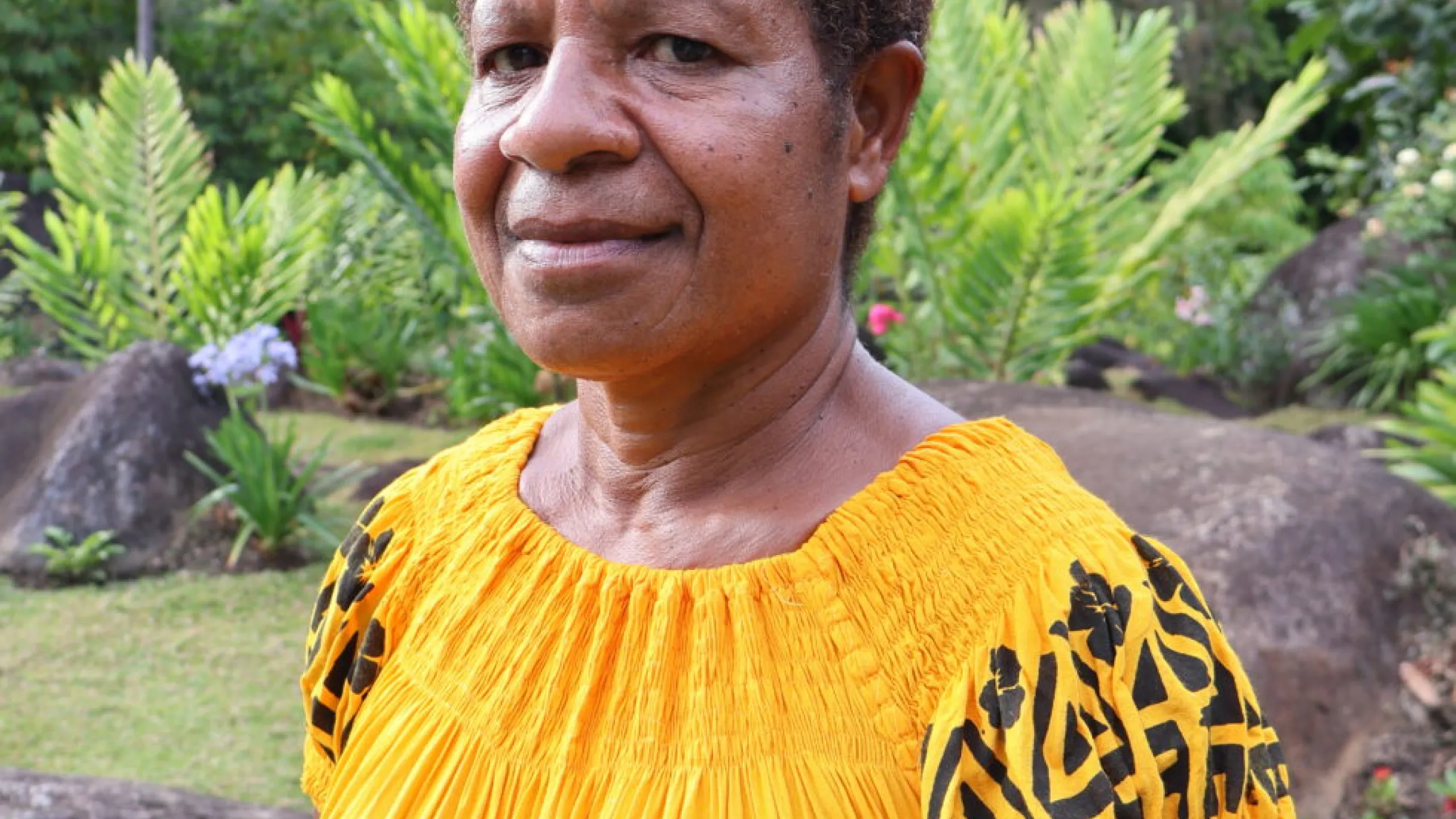
Karito Ketauwo believes that building a better Papua New Guinea starts with those who are educated and willing to serve. “We have to implement our knowledge to help develop our country for the benefit of our people, so they’re happy—and we, in turn, feel fulfilled,” she says. “It’s about taking ownership and asking, what can I do for my people?”
True to her beliefs, Karito started using her extensive nursing knowledge to help the people in her community, Masumave in Unggai-Bena District in Eastern Highlands Province, by sharing information about family planning, immunisations, personal hygiene and environmental cleanliness.
“When I started teaching my people, they changed over just a year,” she says. “People bloomed and their attitude changed in all aspect of life. The environment became so beautiful and people started admiring our community. I wanted it to be a role model so we can roll it out across the district and throughout the province.”
Even though Karito was a qualified nurse, she felt she had a knowledge gap and needed more qualifications to create real change. So, she applied to study a Masters of Nursing Management at the University of Technology Sydney through Australia Awards PNG.
She was older than most of her classmates and found the academic transition challenging—but she persevered.
“In Australia I got a lot of support from Australia Awards. I was really struggling with the academic environment, and so they offered very helpful tutorials,” she says. “When I needed help, I just opened up and asked them and they supported me all the way. I was really happy and that helped me graduate with the qualification I needed.”
“I learned about how to provide leadership, how we can look after our human resources at work and how that can boost their morale to work hard and produce results,” Karito shares.
Her studies opened her eyes to a harsh reality: Papua New Guinea faces a double disease burden—a dangerous overlap of infectious and lifestyle-related illnesses. Inspired, Karito returned to PNG in 2016 with a bold vision: to establish a wellness clinic in Goroka focused on prevention, early diagnosis, and health education.
“So, I decided that when I returned to my country I would set up a wellness centre and do basic health checks, and educate people on healthy living and the root cause of all these lifestyle diseases to help them change their attitude,” says Karito. ”
By 2019, the clinic was open and quickly became a lifeline for the community. Through the clinic and outreach via church gatherings, Karito offers health checks, education, and lifestyle counselling.
“People are starting to change their lifestyles,” she says. “They are also coming to the clinic and I’m doing checks on them and I’ve diagnosed a lot of people with lifestyle diseases, referring them on when needed. If I see they are low risk or middle risk, I educate and counsel them on how they can change their lifestyle, and let them know they can stop the progress of the disease and even reverse it back just by changing their way of eating and thinking.”
Karito’s vision goes beyond treating illness. She is committed to building long-term resilience—especially for women and children. During her studies, she learned about the critical importance of nutrition in the first 1,000 days of a child’s life, and how malnutrition can permanently affect learning and development: “I noticed that our children in Papua New Guinea, especially the Eastern Highlands Province where I come from, most of them are malnourished. It affects their brains and it affects their education and throughout their life. . I thought if we can go to the communities and educate people and teach them how to cook nutritious meals and the importance of 1,000 days, we can make a change.”
She plans to expand her work through antenatal clinics and community training, especially for rural women. In 2024, she will retire from formal nursing to focus full-time on the wellness clinic and extend her outreach.
Her clinic, set in a vibrant model garden she designed, reflects her holistic approach to wellness. With aquaculture, citrus orchards, chickens, and vegetable plots, it’s not just a clinic—it’s an example of how to live sustainably and healthily. Her future plans include a conference centre, guest accommodation, and ultimately, a hospital dedicated to treating lifestyle diseases with a focus on fresh, local nutrition.
Through it all, Karito is determined to empower women and her community to understand and look after their own health.
As Papua New Guinea nears its 50th year of independence, Karito believes there’s much to be proud of—and even more to strive for.
“We can celebrate our sovereignty knowing that we own our land, we own our country. Be happy about being independent,” she says.